Mirwaiz Calls for Review of J&K Bans, Raises Due-Process Questions Over JeI Properties
By: News Desk | 08 September 2026
As Jamaat-e-Islami faces renewed property action in Sopore and its former chief signals a legal challenge to the ban, Mirwaiz Umar Farooq says lasting peace cannot be built by excluding organisations with real social influence.
SRINAGAR, September 9, 2026 — A familiar question has returned to the centre of Kashmir’s political debate: can lasting peace be built while entire political and socio-religious constituencies remain outside the formal political space?
Mirwaiz Umar Farooq believes it cannot.
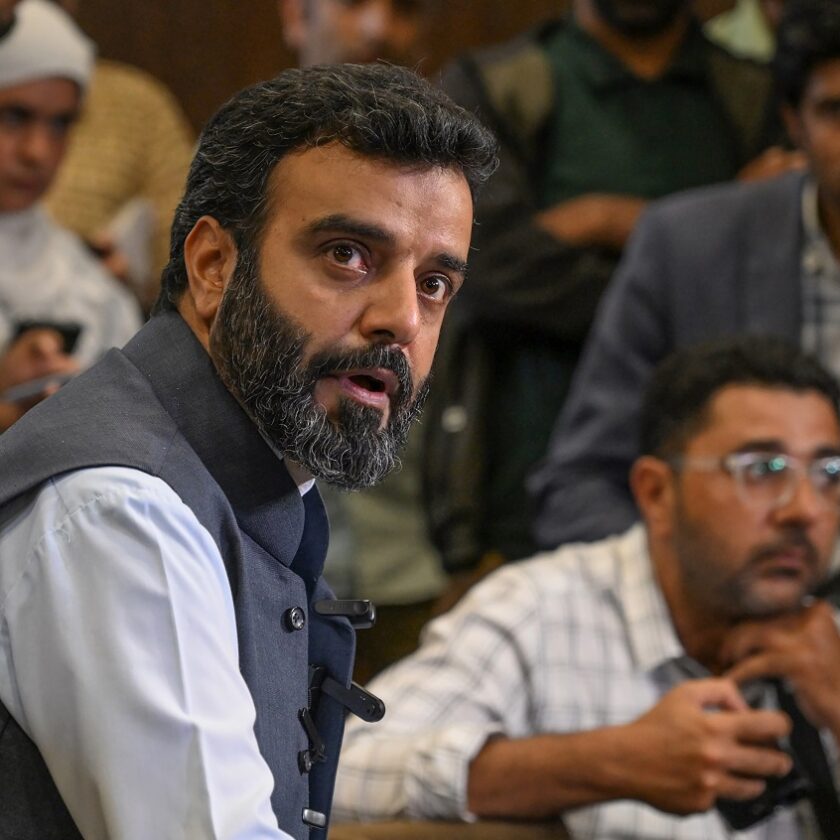
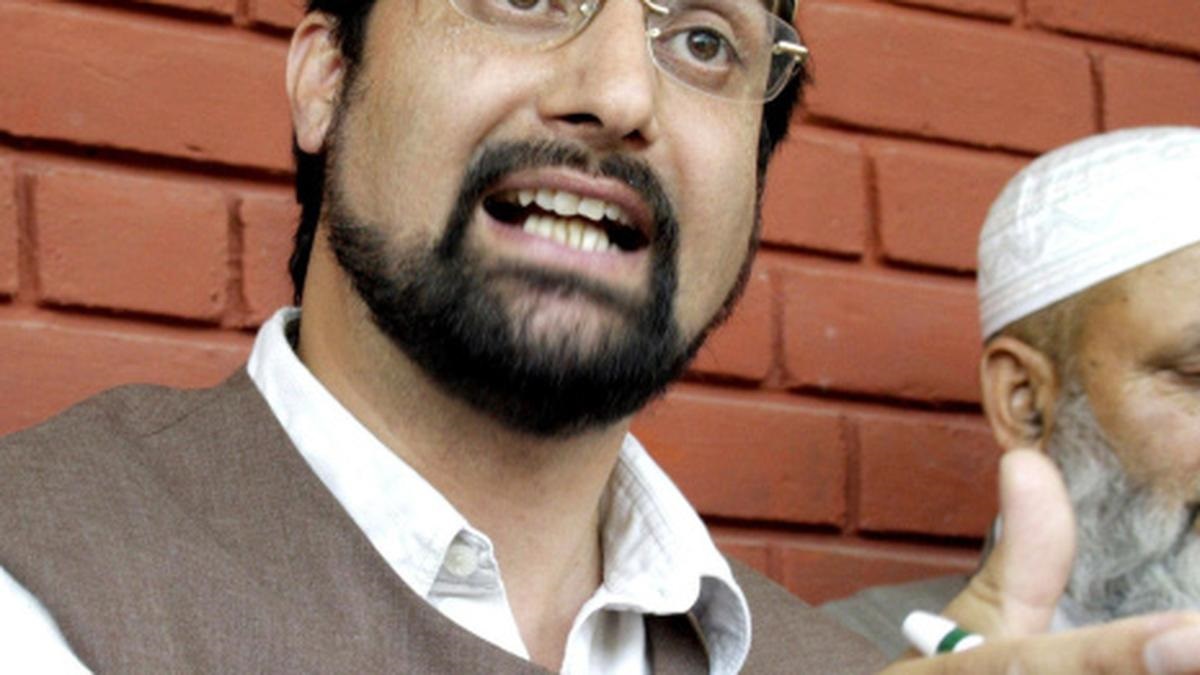
In a statement issued on September 8, the Kashmir religious and political leader called on New Delhi to reconsider its policy of banning social and political organisations in Jammu and Kashmir. His intervention came after former Jamaat-e-Islami Jammu & Kashmir chief Ghulam Muhammad Bhat publicly indicated that the banned organisation would pursue a legal battle against its proscription.
Mirwaiz’s intervention went beyond the question of whether a particular organisation should remain banned.
He linked the issue to rule of law, judicial remedies, political representation and the broader search for peace in Kashmir.
He also urged restraint when properties and institutions associated with banned organisations are subjected to legal action, arguing that where restrictions are challenged before courts, judicial remedies should be allowed to run their course.
The statement arrives days after police in north Kashmir’s Sopore attached two buildings, six shops and two kanals of land allegedly linked to Jamaat-e-Islami under the Unlawful Activities (Prevention) Act.
That coincidence has given the debate a fresh and concrete dimension.
Mirwaiz’s central argument: exclusion cannot produce sustainable peace
Mirwaiz’s message was built around a proposition that has repeatedly surfaced in Kashmir’s political discourse: organisations with genuine social and political influence cannot simply be wished away.
In his statement, he argued that New Delhi should listen to people’s concerns and reconsider its policy of proscribing social and political organisations.
He warned that a sustainable political process cannot be created by excluding genuine voices or replacing them with what he described as “convenient alternatives”.
His emphasis was on engagement.
Those who command real social and political presence, he argued, should be given political space and engaged through dialogue.
It is a political argument, but it also reflects a deeper debate about post-2019 Kashmir.
Since the abrogation of Jammu and Kashmir’s special constitutional status and the reorganisation of the former state into two Union Territories, New Delhi has pursued a security-and-governance framework that places considerable emphasis on eliminating separatist networks, terror financing and organisations considered hostile to India’s sovereignty.
The Centre’s position is fundamentally different from Mirwaiz’s.
For the government, proscription under the UAPA is not primarily about suppressing political disagreement. It is a legal and security mechanism directed at organisations whose activities, according to government findings, threaten sovereignty, territorial integrity, public order or national security.
That disagreement over the basic purpose of a ban is at the heart of the controversy.
The immediate trigger: Jamaat-e-Islami and a fresh legal battle
Jamaat-e-Islami Jammu & Kashmir has occupied a complicated position in Kashmir’s history.
It is a socio-religious organisation with a substantial institutional footprint and a long history in the region, but the Indian government has for decades associated its activities and leadership with separatism and militancy.
The Centre first declared Jamaat-e-Islami Jammu & Kashmir an unlawful association on February 28, 2019, under the UAPA. The government’s notification cited activities it considered prejudicial to India’s sovereignty and integrity and linked the organisation to separatist and militant networks.
The ban was subsequently extended.
In February 2024, the Centre announced that the proscription would continue for another five years.
That extension remains a central part of the current dispute.
Ghulam Muhammad Bhat’s recent public statement, as reported by multiple Kashmir outlets, indicated that the organisation intended to legally challenge the ban. He also sought to distance the Jamaat from a political faction that has emerged under a different banner.
Mirwaiz subsequently seized on the legal dimension.
His argument is not simply that the ban should be removed.
It is that if the ban and consequential actions are challenged in court, the process must be allowed to operate fairly.
What happened in Sopore?
The property question is not theoretical.
On September 3, Sopore Police attached properties at Dooru, including the premises of the Islamia Model School, which officials said had remained closed since 2022.
According to police, the properties consisted of:
- two double-storey buildings;
- six shops;
- two kanals of land.
Authorities said the properties were identified during investigation of FIR No. 42/2025, registered at Sopore Police Station under Sections 10 and 13 of the UAPA.
Police said scrutiny of revenue and other official records established the alleged connection between the properties and the proscribed Jamaat-e-Islami.
The Divisional Commissioner, Kashmir, reportedly notified the premises under Section 8(1) of the UAPA through an order dated August 12, 2026.
The District Magistrate, Baramulla, subsequently issued orders under Sections 8(3) and 8(4), after which police, accompanied by an executive magistrate, carried out the attachment.
This sequence matters.
It means the recent action should not simply be described as authorities “seizing” property without legal procedure.
The police position is that the attachment followed the statutory process.
Mirwaiz’s objection, however, addresses a different concern: whether administrative action against property should proceed in a way that makes a future legal remedy ineffective or practically meaningless.
Those are two separate questions.
Attachment is not necessarily the same as permanent confiscation
This distinction is particularly important in reporting the issue.
The public debate often uses words such as “seized”, “confiscated” and “attached” interchangeably.
Legally, they can mean different things.
In the Sopore case, authorities described the action as attachment under Section 8 of the UAPA and specifically referred to the orders issued under Sections 8(1), 8(3) and 8(4).
Therefore, it would be misleading to portray the September action automatically as a final judicial determination that the property permanently belongs to the government.
That is one reason the due-process argument has entered the political conversation.
The question is not whether the state can act under the UAPA — it clearly has statutory powers.
The question is how those powers interact with notice, adjudication, judicial review and the rights of people claiming an interest in the property.
The Centre’s position is rooted in security
Any examination of the controversy also needs to acknowledge why successive governments in New Delhi have maintained the bans.
The MHA’s official records show that the Centre has classified a broad range of organisations in J&K as unlawful associations under the UAPA.
These include:
- Jamaat-e-Islami Jammu & Kashmir;
- JKLF-Yasin Malik faction;
- Muslim League Jammu Kashmir (Masarat Alam faction);
- Tehreek-e-Hurriyat;
- Jammu Kashmir National Front;
- Jammu Kashmir Peoples Freedom League;
- four factions of Jammu and Kashmir Peoples League;
- Muslim Conference factions;
- Jammu and Kashmir Democratic Freedom Party;
- Jammu and Kashmir Ittihadul Muslimeen;
- Awami Action Committee.
The government has maintained that such organisations are not merely political formations expressing unpopular opinions.
Its notifications and tribunal proceedings cite allegations involving separatism, support for militancy, mobilisation, incitement and activities considered prejudicial to India’s sovereignty and territorial integrity.
This is why the Centre’s argument cannot be reduced to a simple “government versus political dissent” narrative.
From the government’s perspective, the security environment is the starting point for the restrictions.
The timeline is broader — and more complicated — than the usual 2019 narrative
The supplied timeline suggests that most of the bans began year by year after 2019.
The official record tells a more complicated story.
2019: Jamaat-e-Islami and JKLF
Jamaat-e-Islami was declared unlawful on February 28, 2019, while the Yasin Malik faction of the Jammu and Kashmir Liberation Front was declared unlawful on March 22, 2019.
2020–2023: the security framework expands
The subsequent years saw continuing action against organisations and networks associated with militancy and separatism.
But an important correction is needed here: The Resistance Front (TRF) should not be placed in a timeline of UAPA “unlawful associations” in the same category as Jamaat or JKLF.
The MHA’s official terrorist-organisation list identifies Lashkar-e-Taiba/Pasban-e-Ahle Hadis/The Resistance Front and their manifestations and front organisations under the terrorist-organisation framework of Section 35 of the UAPA.
That is a different legal classification.
2024: a major expansion of the unlawful-association list
In 2024, the Centre moved against several additional Kashmir-based organisations.
The MHA records show tribunal proceedings concerning the Muslim League Jammu Kashmir (Masarat Alam faction), Tehreek-e-Hurriyat, JKDFP, JKNF, JKPFL, several JKPL factions and the two Muslim Conference factions, among others.
The Muslim Conference (Bhat and Sumji factions), for example, were declared unlawful in February 2024 — not 2025 as suggested in the original timeline.
2025: Awami Action Committee
Another significant development came in March 2025, when the Centre declared Awami Action Committee and Jammu and Kashmir Ittihadul Muslimeen unlawful associations. The MHA records show the subsequent Unlawful Activities (Prevention) Tribunal proceedings in September 2025.
That is another important correction to the supplied timeline: AAC belongs in the 2025 phase, not 2024.
A widening circle of restrictions
Taken together, the official records show something more significant than a handful of isolated bans.
The Centre’s policy has evolved into a broad legal framework covering organisations associated, in government assessments, with separatism, militancy or activities threatening India’s sovereignty.
The current MHA list includes both organisations banned in 2019 and groups added much later.
This has produced a political paradox.
On one side, the government argues that removing organisational structures associated with separatism weakens the ecosystem that sustained violence and instability.
On the other, critics argue that removing organisations from the public sphere can also eliminate channels through which sections of society historically expressed political or social grievances.
Both arguments contain an element of reality.
Security policy is not designed to preserve every political organisation.
But peace-building is also not simply the elimination of organisations.
At some point, a political process has to answer the question of who speaks for constituencies that do not identify with the official political mainstream.
The “convenient alternatives” question
This is arguably the most politically interesting part of Mirwaiz’s statement.
His warning against replacing “genuine voices” with “convenient alternatives” goes beyond Jamaat-e-Islami.
It challenges the idea that political stability can be created simply by encouraging new organisations while excluding older groups that retain social influence.
Kashmir’s political history makes the question especially sensitive.
The Valley has repeatedly witnessed periods in which formal institutions existed alongside political forces that rejected the prevailing constitutional framework.
The result was not the disappearance of political disagreement.
It often meant that disagreement moved outside conventional institutions.
Mirwaiz’s argument is essentially that political legitimacy cannot be manufactured administratively.
For New Delhi, however, the counterargument is equally clear: organisations that have been found to operate against India’s constitutional and territorial framework cannot automatically be brought back into the political mainstream simply because they retain influence.
That tension will remain difficult to resolve.
The judicial route may become increasingly important
The legal system could now become a central arena in this debate.
Under the UAPA, declarations of unlawful associations are subject to statutory review through the Unlawful Activities (Prevention) Tribunal framework.
The MHA itself publishes tribunal judgments and orders concerning several Kashmir organisations, demonstrating that these restrictions are not entirely outside judicial or quasi-judicial scrutiny.
This is where Mirwaiz’s emphasis on due process becomes significant.
His position does not necessarily require the state to abandon every security measure.
Instead, it asks whether the legal process itself should remain meaningful while those measures are being challenged.
That distinction allows the debate to move away from the simplistic binary of “ban versus no ban”.
The harder questions are:
Was the statutory procedure followed?
Were affected parties given the remedies available under law?
Are property actions proportionate to the underlying proceedings?
Can affected parties effectively challenge administrative decisions?
And ultimately:
Will courts uphold or overturn the government’s restrictions?
Those are legal questions, not merely political ones.
Why the property issue carries unusual emotional weight
Property in Kashmir is never simply property.
Schools, mosques, trusts, offices, community institutions and commercial premises can carry decades of social history.
When one of those institutions is attached, supporters may see the action not merely as financial enforcement but as an assault on an institution that formed part of community life.
The state sees the same property differently if it believes it is being used to sustain an unlawful organisation.
That is why property enforcement can become politically explosive.
The Sopore case illustrates this tension.
The government says it has followed the prescribed UAPA process and acted after investigation and verification.
Critics ask whether the process should proceed with greater restraint while legal challenges are contemplated.
Neither position should be reported as an established judicial conclusion.
The courts, rather than political statements, ultimately determine the legality of contested actions.
Mirwaiz’s intervention comes amid renewed restrictions on his own public activity
The political context surrounding Mirwaiz’s statement is also significant.
Just days before his latest intervention, reports said he was again prevented from delivering his Friday address at Srinagar’s historic Jama Masjid on September 4. He interpreted the restriction as another limitation on his ability to publicly express views.
That does not prove that the restriction and his latest statement are directly connected.
But it does explain why his comments about political space, genuine voices and dialogue carry additional political weight.
Mirwaiz has historically occupied an unusual position in Kashmir: simultaneously a religious authority and a political voice.
That dual role has repeatedly placed him at the intersection of security policy, religious life and the Valley’s contested political discourse.
The larger question: what does “normalisation” mean?
The Centre has often pointed to improved security, elections, tourism, investment and the functioning of elected institutions as evidence of a changing Kashmir.
Those developments are significant.
The 2024 Assembly elections also demonstrated that electoral politics has considerable public participation in the region.
But political normalisation cannot necessarily be measured only through voter turnout or the number of functioning institutions.
A deeper test is whether the system can accommodate disagreement.
That does not mean every organisation must be legalised.
It means that peaceful political disagreement, where legally permissible, should have credible avenues through which it can be expressed.
That distinction becomes particularly important when the government seeks to move Kashmir from a security-centric framework toward a more durable political settlement.
Security and dialogue are not necessarily opposites
There is a tendency in political debates to treat security and dialogue as competing choices.
They do not necessarily have to be.
A government can prosecute terrorism, disrupt terror financing and ban organisations that it establishes are involved in unlawful activity.
At the same time, it can create channels for peaceful political engagement with people who have grievances but are not participating in violence.
The difficult part is defining where one category ends and the other begins.
That is precisely why the legal status of organisations matters.
A blanket assumption that every member, supporter or sympathiser of a banned organisation poses the same security threat would be difficult to sustain as a matter of democratic governance.
Likewise, assuming that every organisation describing itself as political is necessarily harmless would ignore the security history cited by the government.
The answer lies in individualised evidence, due process and clear legal standards.
What Mirwaiz’s statement does — and does not — change
The statement does not revoke a ban.
It does not alter the UAPA.
It does not stop the property proceedings in Sopore.
And it does not establish that the government’s actions have violated the law.
What it does is reopen a political argument.
Can the security architecture built since 2019 coexist with a broader process of political reconciliation?
And if yes:
What organisations and voices should be permitted to participate?
Those questions are likely to become increasingly important if New Delhi seeks a durable political settlement in Jammu and Kashmir.
The road ahead may run through courts before it reaches the negotiating table
For now, the immediate battleground is likely to be legal.
Jamaat-e-Islami faces continuing restrictions.
Its former leadership has indicated an intention to challenge the ban.
Properties associated with the organisation remain subject to enforcement action.
The Centre continues to defend its proscription framework.
And Mirwaiz has called for restraint, dialogue and meaningful judicial remedies.
That creates a three-way intersection of security policy, law and politics.
The government will argue that organisations cannot use political language to escape accountability for activities it considers unlawful.
Critics will argue that security measures should not permanently close the door to political reintegration, particularly when organisations or individuals seek legal remedies and renounce violence.
The courts will ultimately have an important role in determining the legal questions.
Politics, however, will have to address the larger one.
Kashmir’s peace process cannot be measured only by the absence of violence
The most difficult lesson from Kashmir’s history is that silence is not necessarily reconciliation.
A place can become quieter without every political grievance disappearing.
Roads can reopen.
Markets can function.
Tourists can return.
Elections can be held.
Yet questions about representation, identity, political participation and trust can continue beneath the surface.
Mirwaiz’s latest statement is therefore significant less because it immediately changes government policy and more because it articulates an argument that will remain central to any future political process:
peace requires security, but durable peace also requires a political space in which legitimate grievances can be expressed.
The challenge for New Delhi is to determine where that space can safely and legally be widened.
The challenge for organisations seeking that space is equally serious: political legitimacy increasingly depends on constitutional methods, transparency and a clear rejection of violence.
And for Kashmir’s people, the ultimate test is whether the competing sides can move beyond cycles of prohibition, protest and confrontation toward a framework in which disagreement does not automatically become a security problem.
That is a much larger question than the fate of one ban or one property.
It is a question about what kind of political future Jammu and Kashmir is being prepared for.
Fact-checked timeline: major J&K organisational restrictions
| Period | Organisation / category | Verified legal position |
|---|---|---|
| Feb 2019 | Jamaat-e-Islami J&K | Declared an unlawful association under UAPA |
| Mar 2019 | JKLF, Yasin Malik faction | Declared an unlawful association |
| 2024 | Muslim League (Masarat Alam), Tehreek-e-Hurriyat, JKDFP, JKNF, JKPFL, JKPL factions and others | Multiple organisations declared unlawful; UAPA Tribunal proceedings followed |
| Feb 2024 | Muslim Conference (Bhat & Sumji factions) | Declared unlawful |
| Mar 2025 | Awami Action Committee & JKIM | Declared unlawful |
| 2023/current MHA terrorist list | TRF | Listed under the terrorist-organisation framework, distinct from the UAPA unlawful-association category |
| Aug–Sep 2026 | JeI-linked Dooru properties, Sopore | Two buildings, six shops and two kanals attached under UAPA following administrative orders |
| Sep 2026 | Mirwaiz Umar Farooq | Called for reconsideration of bans and stressed due process and dialogue |
The MHA’s official database confirms the distinction between unlawful associations and organisations listed separately as terrorist organisations.